
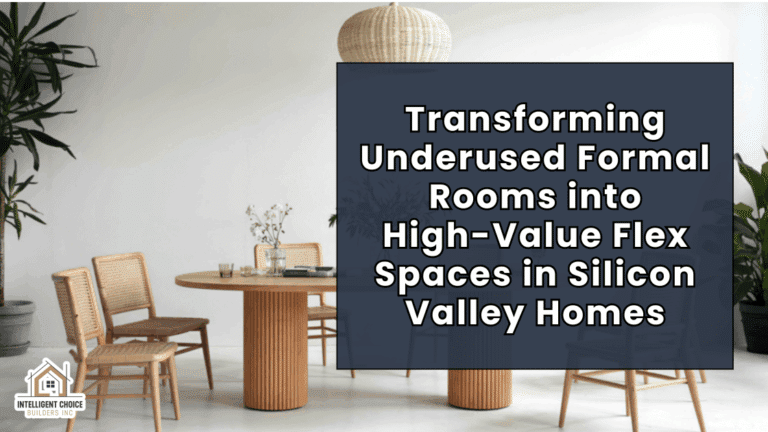
If you live in Silicon Valley, you already know every square foot of your home carries real weight, both in how it feels day to day and how it performs long term.
The challenge is that many homes still have a formal living room or formal dining room that looks nice but rarely gets used. Meanwhile, the way you actually live has shifted toward hybrid schedules, on-the-go family routines, and more “do it all” spaces.
According to the U.S. Census Bureau’s commuting data, working from home remains a meaningful part of how Americans work and live, which keeps flexible layouts in high demand (U.S. Census Bureau commuting data).
The good news is you do not need an addition to get more function out of your home. With the right plan, that underused formal room can become one of the most valuable spaces in your house.
Why Formal Rooms Are Underutilized in Modern Silicon Valley Homes
Formal rooms were designed for a different era of entertaining. Today, most families gather in the kitchen, the casual dining area, or a great room that connects to the backyard. The formal living room becomes a “nice but off-limits” space, and the formal dining room often turns into a storage zone for special-occasion furniture.
Silicon Valley makes this problem even more obvious:
- Open concept living is the norm. Homes are increasingly oriented around a central gathering space that pulls daily life away from separate formal rooms.
- Daily routines need practical layouts. Whether you are juggling school drop-offs, meetings, workouts, or hosting friends for a casual dinner, you need rooms that serve a real purpose.
- Buyers now look for flexible floor plans. Zillow’s research shows many prospective buyers still value an extra room that can serve as a home office, which is a strong signal that flexible “extra rooms” have real market appeal (Zillow Consumer Housing Trends Report).
If your formal room is only used a few times a year, it is not “luxury.” It is wasted potential.
The Benefits of Creating Flexible Spaces: Adding Function and Value
A flex space is not just a trendy label. It is a design strategy that helps you get more from the home you already own.
What you gain immediately
- A room that matches your real life. Work, fitness, hobbies, guests, kids, downtime, all in a space that is intentionally planned.
- Less clutter elsewhere. When one room has built-in storage and a defined purpose, the rest of the house stays calmer.
- More comfort and privacy. A dedicated spot for calls, focused work, or decompressing can reduce friction in an active household.
What you gain long term
- Stronger resale appeal. Buyers love homes that feel adaptable. If they can picture multiple uses for a room, it reduces uncertainty.
- Better usability without expanding the footprint. In Silicon Valley, expanding is often possible, but it is not always the smartest first move. Optimizing existing space can be the higher-value decision.
The key is to design the room so it is flexible without feeling temporary.
Top Ideas for Transforming Your Formal Room Into a Flex Space
Below are high-impact conversions that work especially well in Silicon Valley homes, where buyers and owners value function, clean design, and thoughtful upgrades.
Home office conversion ideas: a work-ready space that still feels like home
If you work from home even part-time, aim for a room that supports focus without looking like a corporate cubicle.
Actionable upgrades that make the biggest difference:
- Place the desk where natural light is present, but avoid harsh glare on screens.
- Add closed storage (cabinets or a credenza) to quickly “reset” the room.
- Use a neutral backdrop behind the desk for video calls, such as a simple wall color or subtle built-in shelving.
- Plan outlets early so cords do not run across the room.
This approach keeps the room professional when you need it, and relaxed when you do not.
Guest suite redesigns: a comfortable landing spot without committing to a full bedroom buildout.
A true guest suite is a luxury, but many homes can create a guest-ready room with the right layout.
Consider:
- A wall bed or high-quality sleeper sofa to preserve open floor space most days.
- A small wardrobe or built-in closet system for longer stays.
- Layered lighting so the room works for reading, relaxing, and sleeping.
- A sliding door or upgraded door for privacy if the existing entry feels too exposed.
If you have family visiting from out of town, this single upgrade can change how your whole home functions.
Entertainment lounge makeover: a “second living room” that actually gets used
If your household competes for the main living room, a flex lounge is one of the best quality-of-life upgrades you can make.
To make it feel intentional:
- Create a media wall with concealed storage for games, equipment, and toys.
- Use flexible seating like two swivel chairs plus a loveseat instead of one oversized sectional.
- Add a small table for casual dining, board games, or laptop use.
- Consider acoustic improvements if the room echoes or shares a wall with bedrooms.
This kind of room is especially appealing to buyers because it solves a real problem: where everyone goes when they want space.
Home gym setup tips: wellness, recovery, and stress relief in one room
A flex gym does not need a full commercial setup. A smart plan makes the room feel premium without feeling crowded.
High-value features:
- Durable flooring that can handle weights and movement.
- A mirror wall for training, posture, and visual expansion of the room.
- Storage for equipment so the room stays clean.
- Space for recovery, such as a mat zone or stretching corner.
In a high-pressure region, a personal wellness room is more than a perk. It is a lifestyle upgrade.
Hobby and craft room inspiration: a creative space that does not take over the house
If your hobby regularly migrates to the dining table, this conversion will feel like instant relief.
Plan for:
- A work surface that matches what you do, from crafting to music to collectibles.
- Task lighting that reduces eye strain.
- Closed storage for supplies to keep the room from looking messy.
- A “display zone” so the room feels curated, not chaotic.
When designed well, hobby spaces also stage beautifully because they communicate personality and function.
Practical Steps to Redesign and Repurpose Your Formal Room
A great flex space is not about copying a Pinterest photo. It is about designing around how you live, then building in options for how your life might change.
1) Define your primary use, then choose one secondary use
Start with the truth: what do you need most right now? A workspace, a guest room, a playroom, a lounge, a gym, or a creative studio?
Then pick one secondary use that pairs naturally. Examples:
- Office + guest room
- Lounge + homework zone
- Gym + meditation corner
- Hobby room + storage hub
This prevents the room from becoming a “random everything room.”
2) Build the layout around zones, not furniture
Instead of thinking “sofa goes here,” think in zones:
- A focus zone (desk, craft table, reading chair)
- A storage zone (built-ins, closets, cabinetry)
- A flexible zone (open floor space, fold-down bed, movable seating)
Zoning helps the room stay functional even when you rearrange pieces.
3) Choose furniture selection for flexibility
Flex rooms work best when key items can adapt:
- Wall beds or sleeper sofas for overnight use
- Nesting tables or an expandable table for multi-use surfaces
- Modular seating that can move for gatherings
- Closed storage pieces that hide visual clutter fast
A room can be flexible and still feel high-end. The difference is intentional design.
4) Make lighting upgrades for versatile use
Most formal rooms have a single overhead fixture, which rarely works for real living.
Plan layered lighting:
- Ambient lighting (overhead or recessed)
- Task lighting (desk lamp, reading lamp, under-shelf lighting)
- Accent lighting (wall sconces or picture lighting)
If you are considering broader upgrades that improve daily function and resale appeal, it is often smart to coordinate your flex room redesign with adjacent high-impact projects like kitchen remodeling in Fremont, so your finishes and flow feel consistent.
5) Think about sound and privacy early
Many flex rooms fail because they are not comfortable to use when the house is active.
Simple improvements can make a big difference:
- A solid core door instead of a hollow door
- Weatherstripping for sound control
- Rug and drapery for echo reduction
- Thoughtful placement of speakers, desks, or workout zones away from shared walls when possible
A room that supports privacy and calm will get used far more often.
The Role of Technology and Smart Features in Modern Flex Spaces
In Silicon Valley, smart features are not “extra.” They are expected, especially in spaces that shift between work, entertainment, and relaxation.
High-value upgrades to consider:
- Strong connectivity: mesh WiFi support and a clean spot for network equipment.
- Smart lighting: scenes for work, movie night, and evening wind-down.
- Power planning: enough outlets for a desk setup, charging, and entertainment gear without extension cords.
- Climate comfort: smart thermostat control and room comfort strategies so the space stays usable year-round.
- Sound control tools: acoustic panels, soft surfaces, and door upgrades to support calls and media use.
The goal is simple: the room should feel effortless to use, no matter what you are using it for.
Maximizing ROI: How Flex Spaces Appeal to Silicon Valley Buyers and Renters
Flex spaces perform well because they solve modern needs in a market where layout matters. Buyers often want homes that support hybrid work, multigenerational living, and the ability to adapt without major remodeling.
To maximize ROI and buyer appeal:
- Keep it visually clean. Built-in storage and neutral finishes help the room photograph well and feel larger.
- Design for easy re-imagining. Even if you use the room as a gym, stage it so it can also read as an office or guest room.
- Avoid overly permanent niche decisions. A bold theme can be fun, but highly specific designs can narrow buyer interest.
- Show the flexibility. A desk plus a daybed. A lounge chair plus a fold-down work surface. Buyers love seeing options.
The strongest flex rooms feel intentional rather than improvised. That is what signals value.
Reimagining Home Potential—Start Your Flex Room Transformation Today!
Your formal room does not need to stay a “special occasion” space. With smart planning, it can become the room you use the most, and the one future buyers appreciate immediately. If you want a flex space that feels seamless with the rest of your home and is built for Silicon Valley living, Intelligent Choice Builders can help you plan the layout, finishes, and upgrades. Hence, the room works beautifully now and stays valuable later.
Short takeaway: Pick one primary function, build in one secondary use, and design around zones, storage, and comfort. That is how an underused formal room becomes a high-value flex space you actually enjoy using.